Professional Training
Boost Your CV
Practical, industry-focused professional training designed to strengthen your CV and open doors to senior engineering roles.
Training for Every Stage of Your Career
Whether you are still studying or already working, our programmes are built around where you are today — and where you want to go next.
Professional Training for Companies On-job real time training and institutional strengthening
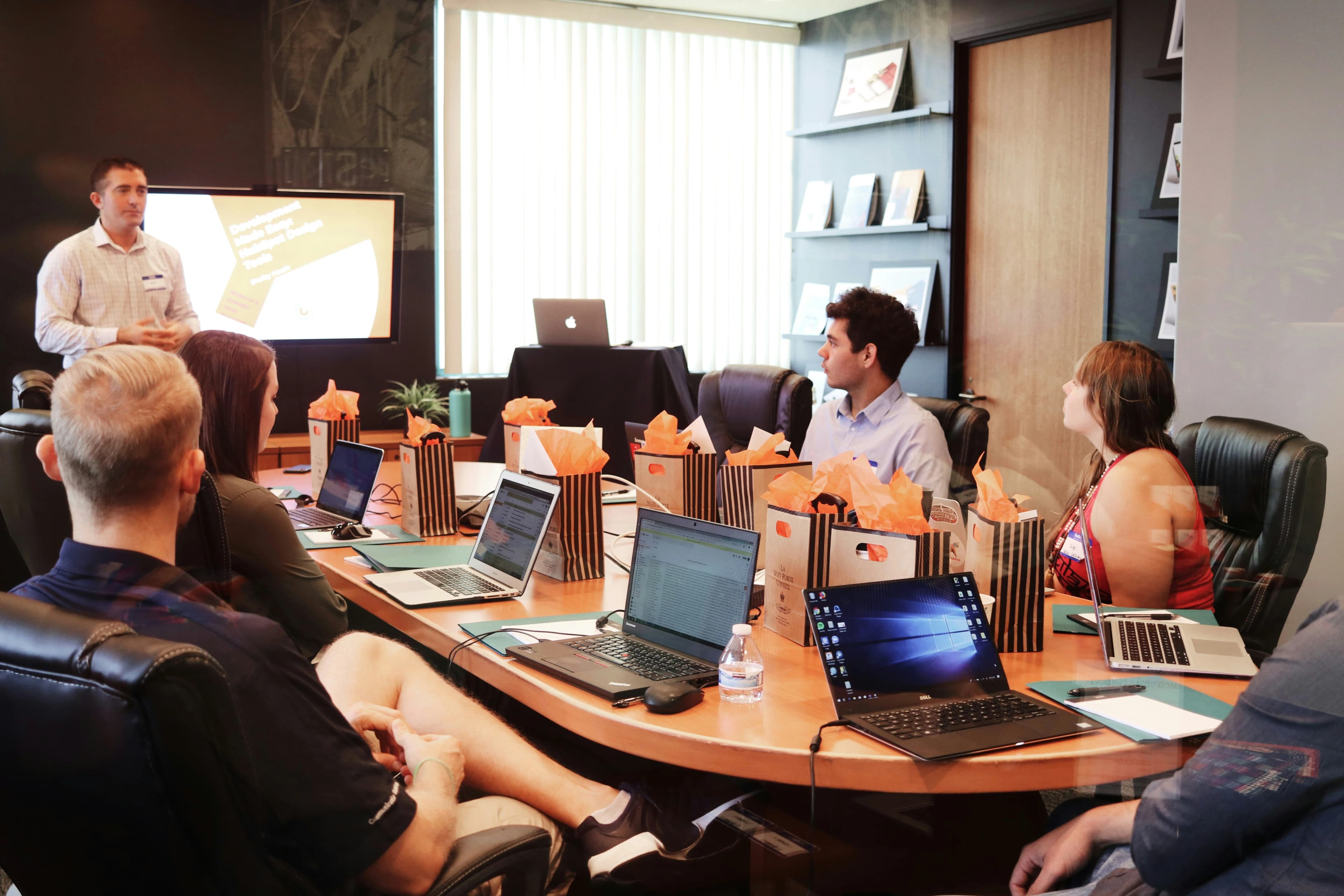
- Private tutoring for challenging engineering subjects
- Academic guidance and specialization selection
- Hands-on workshops and summer programs
- CV preparation starting from university
- Mentorship connections with specialized engineers
Professional Training for Practitioners Continued Education programmes for Graduates & Specialist

- PE licensing exam preparation and professional practice license
- Internationally accredited training courses for engineers
- Engineering consultancy services
- Job opportunities and professional networking
- Continuous professional development programs
Our Disciplines
Explore professional training courses across our core engineering disciplines and exam preparation programmes.
Professional Training Programmes
Advanced Solid Mechanics
Advanced topics in stress analysis, constitutive modelling, and failure criteria. Covers elasticity, plasticity, viscoelasticity, and fracture mechanics with practical applications.
Aeroelasticity
Study of interactions between aerodynamic, elastic, and inertial forces. Covers flutter analysis, divergence, control reversal, and buffeting with real-world aircraft case studies.
Aircraft Structures
Structural analysis and design of aircraft components. Covers thin-walled structures, buckling, fatigue, and damage tolerance for wings, fuselage, and control surfaces.
Analytical Dynamics
Lagrangian and Hamiltonian mechanics with applications to multibody systems. Covers virtual work, D'Alembert's principle, Kane's method, and rigid body dynamics.
Biomechanics (An Ancillary Mathematics)
Develop a strong foundation in the vector and tensor operations fundamental to biomechanics. This online course covers vector and tensor notation, algebra, and operations, providing the mathematical tools required for continuum biomechanics and the analysis of stress, strain, and material behaviour.
Hydraulic Structures
Develop a comprehensive understanding of the principles and engineering practices involved in the design and analysis of hydraulic structures. This online course covers dam types, hydrological and hydraulic design principles, structural stability, seepage analysis, spillway design, and safety assessment, providing the essential knowledge required for the planning, design, and evaluation of major water-retaining structures.
MIDAS Civil Training Course
Master the fundamentals and advanced capabilities of MIDAS Civil, one of the leading structural analysis and bridge engineering software solutions used by consulting firms and infrastructure organizations worldwide. This practical course teaches participants how to model, analyze, and design bridges and civil infrastructure efficiently using industry-standard workflows.
Construction Management
Project planning, scheduling, cost control, and site management. Covers CPM, earned value analysis, resource allocation, and contract administration for construction projects.
Earthquake & Seismic Design
Seismic analysis and design of structures per international codes. Covers response spectrum analysis, pushover analysis, capacity design, and seismic detailing for concrete and steel.
FE-EIT-USA
Structured review for the Fundamentals of Engineering and Engineer-in-Training exams. Covers mathematics, statics, dynamics, mechanics of materials, fluids, and the FE exam specification.
Fatigue Analysis
Fatigue life prediction and damage tolerance assessment. Covers S-N curves, stress-life and strain-life approaches, fracture mechanics, and cumulative damage rules for engineering components.
Hydrology
Surface and groundwater hydrology for engineering applications. Covers rainfall-runoff modelling, flood frequency analysis, hydrograph analysis, and stormwater management design.
Hydropower
Hydropower engineering from resource assessment to plant design. Covers hydrology, turbine selection, penstock design, powerhouse layout, and environmental considerations.
Mechanical Design
Machine element design and mechanical systems integration. Covers shafts, bearings, gears, springs, fasteners, and design for manufacturing with industry-standard practices.
Orbital Mechanics & Astrodynamics
Two-body problem, orbital manoeuvres, and interplanetary trajectories. Covers Kepler's laws, Hohmann transfers, patched conics, and launch vehicle performance analysis.
PE Malaysia
Comprehensive preparation for the Professional Engineer examination with the Board of Engineers Malaysia. Covers competency areas, ethics, report writing, and technical interview preparation.
PE-USA
Structured preparation for the NCEES Principles and Practice of Engineering exam. Covers breadth and depth modules, code references, and timed problem-solving practice.
Prestressed Concrete
Analysis and design of prestressed concrete members. Covers pre-tensioning, post-tensioning, loss calculations, flexural and shear design, and anchorage zone detailing per ACI and Eurocode.
Robotics Kinematics
Forward and inverse kinematics for serial manipulators. Covers DH parameters, Jacobian matrices, workspace analysis, trajectory planning, and singularity avoidance.
Structural Dynamics
Dynamic response of structures to time-varying loads. Covers single and multi-degree-of-freedom systems, modal analysis, response spectrum methods, and seismic response of buildings.
Aerospace Engineering: Aerodynamics, Structures & Propulsion
Take your engineering expertise to new heights! This comprehensive course covers aerodynamics, aircraft structures, flight mechanics, propulsion systems, and aerospace design. Gain practical, industry-relevant skills through real-world applications, case studies, and practical examples to analyse, design, and evaluate modern aircraft and aerospace systems.